Alienation of Affections – The Basics

North Carolina is one of the few states that still recognize the torts of alienation of affections and criminal conversation.  These claims may be brought under NC common law against someone who takes away the affection of a persons’s spouse.

The basis or elements of a claim for alienation of affections are:

  • There is a marriage,
  • With some love and affection, and
  • A third party takes willful and malicious acts and damages the love and affection.

These acts have to occur prior to the parties date of separation and as you can see, do not have an element of sexual relations.

Criminal conversation (adultery) is a tort brought by the injured spouse in NC against the person who had sexual relations with his or her spouse.  Criminal conversation may be proven in court by witnesses, admissions of the parties, or evidence of opportunity and inclination related to the relationship.

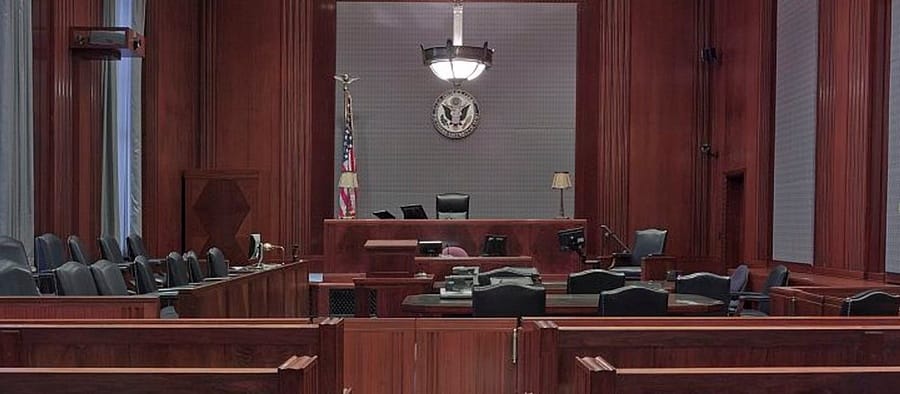
Alienation of affections and criminal conversation cases are usually brought in superior court in NC but in some circumstances they are brought in district court.  When these cases are brought in District Court the defending party frequently seeks to remove the case to superior court.  Either party in one of these cases has an absolute right to a jury trial.

The litigation of these kinds of cases may take several months to several years depending on the complexity of the facts, number of witnesses, and other related issues.

A plaintiff in these kinds of cases will usually seek compensatory and punitive damages.

Compensatory damages are to compensate the plaintiff for the value of the loss of the services and relationship with his or her spouse and to repay damages caused by the defendant (such as when  a plaintiff suffers medical expenses).

Punitive damages are to punish the defendant for his or her conduct.


____________________

Raleigh lawyer Scott Allen handles alienation of affections and criminal conversation cases and has over seventeen years of experience.  

If you have questions or need assistance call him at (919) 863-4183 or email at sallen@allenspence.com.  

Alienation of Affections and Criminal Conversation

Getting involved in a lover’s quarrel could come with a hefty price tag. This is particularly true if the person you get involved with is still  legally married. There have been numerous cases in which plaintiffs have been awarded substantial amounts of money for suing a third party member for allegedly breaking apart couples.

Alienation of Affections is a tort, with roots in the New York legislature that date back to the 1860s.  Common law now defines alienation of affections as a “tort action brought by a deserted spouse against a third party alleged to be responsible for the failure of marriage” (wikipedia). The defendants in these cases are usually an adulterous lover, family member, therapist, or any other party that intervenes or destroys the marriage.

Examples of Alienation of Affections have been seen in North Carolina courtrooms as far back as 1926. That year, a guilty verdict was issued against a man for having extramarital relations with the plaintiff’s wife. That relationship ended up costing the defendant $12,000. But that figure is on the rise. In fact North Carolina juries have awarded spouses upwards of $1 million in certain cases. A jury in Forsyth County in 1997, issued a verdict in the amount of $1.2 million. In some cases, additional compensation could be awarded for criminal conversation claims.

Criminal Conversation is a type of civil lawsuit involving an injury to a person or individual due to sexual intercourse between a lover’s spouse and a third party. It’s similar to “strict liability tort” as the plaintiff has to prove the following: act of intercourse, existence of a valid marriage between the plaintiff and adulterous spouse, and emergence of the lawsuit within the statute of limitations. One probable defense for criminal conversation would be if the plaintiff and their partner were legally separated, with an intention to keep the separation permanent. Criminal Conversation can not be defended by the simple, “ I didn’t know he or she was married” excuse.

Since Alienation of Affection does not require proof of extramarital sex, it is more difficult to prove than  criminal conversation. Criminal Conversation and alienation of affections have both been criticized by law officials. Some critics say the laws contribute to blackmail and in some cases forced settlements. Cases involving Criminal Conversation and alienation of affection are isolated to Illinois, Mississippi, New Hampshire, New Mexico, South Dakota, North Carolina, and Utah. However these issues have been most prevalent in North Carolina. There are forty-three states that have abolished such cause for action in cases of Alienation of Affections. The way each state deals with each issue varies due to differences in state laws.  So the next time you think you’re ready to say, “I do”, make sure you are really ready. Depending on where you live, you might end up shelling out big bucks.